
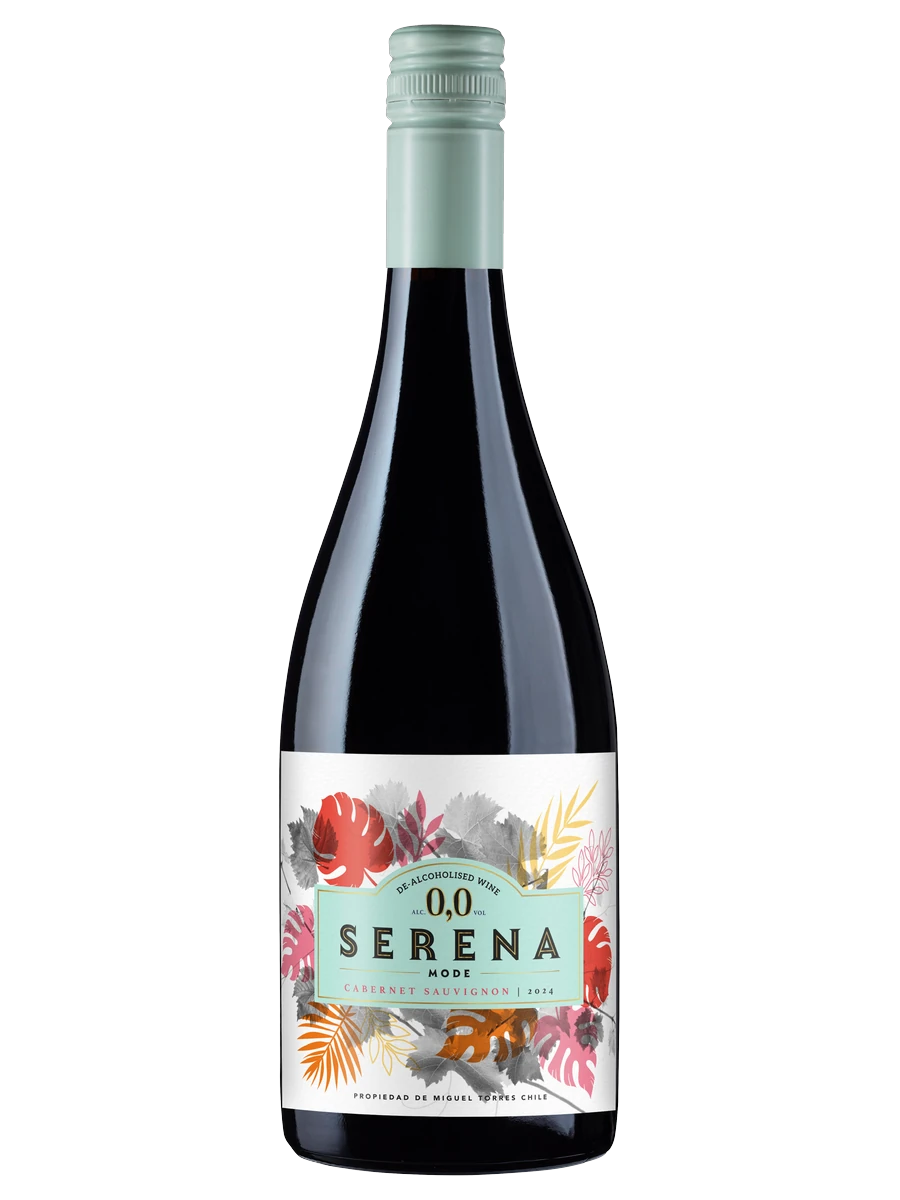
Serena Mode Cabernet Sauvignon
81/100
The short takeThe fruit is a Cabernet’s fruit, and it is ripe. Light tannin and modest acidity let a noticeable sweetness sit in the middle. The finish is the short side of short to medium.
Tasted Karl HillHow we score
Serve 14–15°C (importer sheet).
Who it’s for A soft Cabernet when ripe fruit and a little sweetness are welcome. The finish does not stay.
Try instead
-
Paso Robles Cabernet Sauvignon
A higher-scoring bottle in this style
Luminara Paso Robles Cabernet Sauvignon sits at 90 in the same style. It has stronger acidity.
Compare -
Cabernet Sauvignon
A higher-scoring bottle in this style
Isabel Cabernet Sauvignon sits at 85 in the same style. It has less perceived sweetness and stronger acidity.
Compare -
Cabernet Sauvignon
A higher-scoring bottle in this style
Saint Viviana Cabernet Sauvignon sits at 84 in the same style. It has less perceived sweetness.
Compare
TDS Wineprint
This pour · documented production
In the glass
- Nose
- Blackcurrant, ripe cherry, and plum. A ripe Cabernet nose, and nothing else competing with it. No green edge and no oak. The fruit is the whole aroma.
- Palate
- Soft and fruit-forward. Sweet blackberry and red cherry lead, and they stay forward. Tannin is light, a grip you can find and then lose. Acidity is modest, so the fruit does not turn sharp. Residual sweetness is noticeable. It fills the middle and keeps the blackberry from reading dry.
- Finish
- Short to medium. Dark fruit carries it, and the close is slightly sweet. The tannin does not stay. What stays is the fruit, and then that sweetness.
Structure and likeness Show Hide
Structure
- Sweetness
- Medium-sweet
- Acidity
- Soft acidity
- Tannin
- Low tannin
- Finish length
- Medium finish
- Carbonation
- Still
How wine-like is it?
Separate from the score. A convincing resemblance is not a higher rating.
It tastes like a soft, sweet Cabernet. The fruit is the grape. The structure is lighter than a dry red.
The wine
It is a Cabernet nose: ripe dark fruit, with no green edge and no oak in the way. Nothing else competes. The aroma is the grape, turned toward fruit.
The palate is soft and fruit-forward. Tannin is light. You can find a little grip, and then it lets go. Residual sweetness is noticeable. Mouthfeel is soft. There is no hard edge where a bigger Cabernet would have one.
The finish is short to medium. The tannin does not linger. It leaves while the nose is still the fuller part of the glass.
This tastes like the Cabernet the label names, made softer and sweeter than a dry red. The fruit is there, and it matches from nose to palate. The limit is structure. Light tannin and modest acidity give the sweetness the room, and the finish does not hold as long as the aroma suggested. Pleasant, and not a dry Cabernet. The sweetness is part of the wine.
81 is typical of the 16 dealcoholized Cabernet Sauvignon bottles we've tasted.
The bottle
Show
Hide
Research notes
It does not name a machine and does not print a volume. It prints 0,0% ABV, residual sugar 35 g/L, total acidity 6.1 g/L as tartaric acid, and pH 3.22. Winemaking on that sheet is fermentation in stainless steel, then extraction of the alcohol only. The Sauvignon Blanc sheet’s fermentation time and 36 g/L sugar are not used here.
Where to buy
- Vineyard Brands
- Package
750 ml bottle
- Typical price
-
215.00 CZK / 750 ml bottle
- Also listed
- Vineyard Brands
- Availability
US retail via Vineyard Brands distributor; 750 ml bottle
Availability is market-specific; a producer link does not establish shipping to every country. Prices and availability are independently observed and may change. Retailer listings do not imply endorsement. A different package is labeled as a different format. Reader-service exceptions and commercial links are identified above; neither affects scores, rankings, classification, verification, or editorial coverage.
Product facts
- Producer
- Miguel Torres Chile
- Origin
 Central Valley, Chile
- Residual sugar
- 35 g/L
- Base beverage
- 100% Cabernet Sauvignon
- Bottle / can
- 750 ml bottle
Sources & verification
Show details
Hide details
Source links leave this site and open in a new tab.
Evidence at a glance
- Bottle verified3 facts
- Producer documented1 fact
- Distributor sourced2 facts
- Retailer sourced2 facts
- Unverified3 facts
Production record
One core fact remains to be documented or rechecked.
- Classification
- Verified
- Method
- Undeclared
- ABV
- Exact declaration
- Origin
- Documented
- Record
- Current
Sources
-
Bottle / can label Bottle label
- ABV
- Production
- Country
3 notes
- ABV
- Front label reads 0,0 alc. vol.
- Production
- Front label reads de-alcoholised. It does not name a machine.
- Country
- Front label reads propiedad de Miguel Torres Chile.
-
2 notes
- Sugar
- Exact importer 2024 Cabernet sheet reopened on 2026-10-03: residual sugar 35 g/L.
- Origin
- The label names Chile and does not name the valley.
-
2 notes
- Volume
- Restore the explicit 0.75 L bottle size already captured in the dated original retailer observation and offer. A bot challenge on 2026-10-03 prevents a new retailer verification; the original successful date is retained.
- Price
- Global Wines lists 215 Kč for 0.75 L, Cabernet Sauvignon, vintage 2024, in stock. The same page names Spain as country of origin; the bottle and importer sheet say Chile, so that line was not copied.
-
Note
- Method
- Reopened exact 2024 Cabernet sheet on 2026-10-03. It documents stainless-steel fermentation followed by alcohol extraction but does not name a machine or provide a full ingredients declaration or barcode. Do not transfer Sauvignon Blanc technique or composition.
Product record history Sourced changes and open disagreements. Prior claims stay on the record when sources conflict.
- ReviewedReviewed and published.
- UpdatedCatalog record updated from sourced research.
Structure
Closest by structure
-
Zéro Degré Rouge
81
same structure profile
Compare -
Shine Zero
80
same structure profile
Compare -
Red French Style
83
same structure profile
Compare
Taste
Want something drier?
-
Cabernet Sauvignon
Be Well Cabernet Sauvignon has less perceived sweetness and stronger acidity.
Compare -
Cabernet Sauvignon
Sinzero Cabernet Sauvignon has less perceived sweetness and stronger acidity.
Compare -
Cabernet Sauvignon
Appalina Cabernet Sauvignon has less perceived sweetness and stronger acidity.
Compare
81/100