
Cabernet Sauvignon
77/100
The short takeRecognizable Cabernet fruit — blackcurrant, cherry, plum, a touch of vanilla — but the glass is soft, thin, and a little sour. More fruit than structure. A simple, slightly drying finish. A straightforward red that can come across under-concentrated and sharp.
Tasted Karl HillHow we score
In the glass
-
Nose
Blackcurrant, dark cherry, and plum. Cabernet fruit, fairly clean, not much oak — vanilla is a touch, not a plank.
-
Palate
Soft, lightly sweet fruit in a thin middle. Modest tannin. A sour edge shows through the sweetness and does not go away. Concentration is limited; the Cabernet character is there, the body is not, and the glass feels under-built.
-
Finish
Simple and slightly drying. Fruit fades fast; a little tannin and sourness remain. Short, and sharper than the nose suggested.
How wine-like is it?
The fruit is recognizably Cabernet. The palate is not: too thin, too sour, not enough tannin or concentration to stand in for a structured red.
Structure
- Off-dry
- Bright acidity
- Low tannin
- Light body
- Short finish
- Thin
- Still
The wine
The finish tells you the score. Simple, slightly drying, fruit already gone. What you remember is a thin middle and a sour edge, not a Cabernet frame.
Work back from there. Blackcurrant, dark cherry, and plum are on the nose, and they are recognizably Cabernet. Vanilla is a touch on the palate, not a plank of oak. The fruit is lightly sweet and soft. Tannin is modest — enough to dry the close, not enough to build a red. Then the glass goes thin. Concentration is limited. Sourness shows through the sweetness. It can drink sharper than the dark-fruit aroma promised.
Chill it and the fruit stays tidy. It will not grow in the glass. This is a straightforward dealcoholized Cabernet: the variety is in the fruit, not in the structure. Soft, a little sweet, a little sour, short. If you want grip and density, look elsewhere. If you want Cabernet-shaped fruit in a light pour, this is that bottle, and the drying close is the last true thing it does.
The sour edge is the fault that matters. Light sweetness on the fruit is not enough to cover it, and modest tannin only dries the end. It is not unpleasant so much as under-built: Cabernet-shaped aroma, then a light, sharp drink.
How to drink it
Slightly chilled, red-wine glass.
Who it’s for
When you want Cabernet-shaped fruit without a heavy, tannic pour — and you can live with a thin middle.
The bottle
Production Dealcoholized
Evidence Producer documented
Production type describes how it is made, not how it tastes. What this classification means.
Method Vacuum distillationVacuum distillation at low temperature. Aromas extracted before alcohol removal, then reintegrated cold (Gueule de Joie technical description).Verified from a retail listing · Oct 2026
Research notes
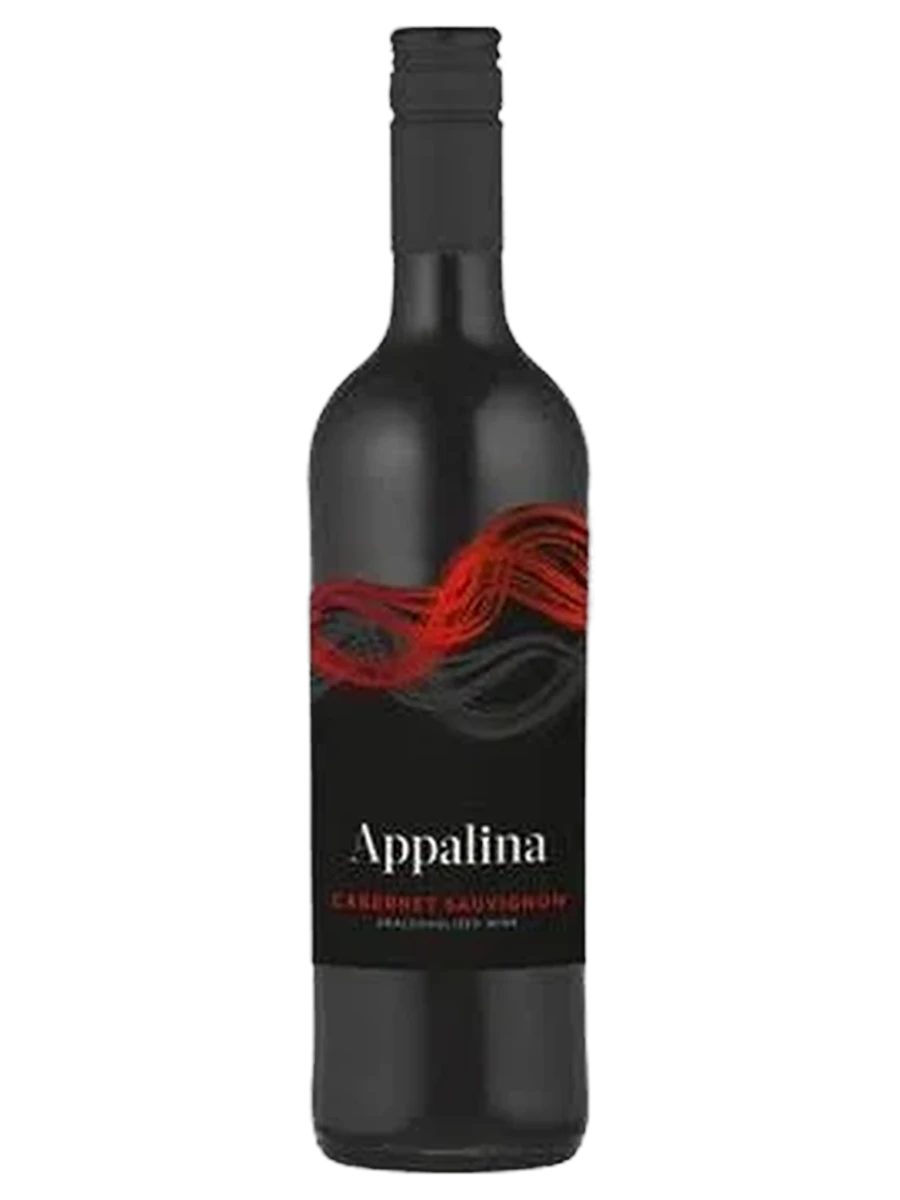
Photographed front label reads Appalina, CABERNET SAUVIGNON, DEALCOHOLIZED WINE (black capsule). It does not print a residual ABV. Weinkellerei Hechtsheim lists Cabernet Sauvignon as entalkoholisierter Rotwein with less than 0.5% alcohol. Gueule de Joie titles it Cabernet Sauvignon Appalina, 0.5°, 75 cl, Germany, and describes vacuum distillation at low temperature with aroma extraction before removal and cold reintegration. Ingredients there: dealcoholised cabernet sauvignon wine, natural flavourings, sulphites. Vinello also lists the SKU as alcohol-free under 0.5%; its Spain country line is not copied here. The original price on this stub is $7.99. Published tasting copy elsewhere (including Tannic Panic) talks up blackcurrant, cranberry/pomegranate, vanilla, and tannin against a light acidic palate — those notes are not this cellar pour.
Where to buy
- Weinkellerei Hechtsheim
- Package
750 ml
- Typical price
-
€7.38 / 750 ml
- Also listed
- Appalina — Weinkellerei Hechtsheim · Producer
- Availability
US retail; European retail including Gueule de Joie (FR) and Vinello (DE)
Prices and availability are independently observed and may change. Retailer listings do not imply endorsement. A different package is labeled as a different format. Reader-service exceptions and commercial links are identified above; neither affects scores, rankings, classification, verification, or editorial coverage.
Product facts
- Producer
- Weinkellerei Hechtsheim
- Base beverage
- Cabernet Sauvignon, fermented then dealcoholized
- Bottle / can
- 750 ml
Sources disagree on Country.
Sources & verification
Show details Hide details
Source links leave this site and open in a new tab.
Where sources disagree
Sources disagree on the following points.
- Country: Vinello prints Country Spain for this Cabernet. Producer and Gueule de Joie place the brand in Germany. Recorded country stays Germany.
Evidence at a glance
- Producer documented5 facts
- Bottle verified1 fact
- Secondary source1 fact
- Retailer sourced4 facts
Sources
-
3 notes
- ABV
- Producer: Enthält weniger als 0,5% Alkohol.
- Production
- Producer quality line: entalkoholisierter Rotwein.
- Country
- Weinkellerei Hechtsheim, Mainz-Hechtsheim. See discrepancies for Vinello Spain claim.
-
3 notes
- Method
- Gueule de Joie technical description names vacuum distillation. Hechtsheim page does not name the machine.
- Volume
- Gueule de Joie: 75.0 cl.
- Price
- Gueule de Joie sale price €7.38 (regular €8.20) for 75 cl, rechecked 2026-10-02.
Product record history Sourced changes and open disagreements. Prior claims stay on the record when sources conflict.
- ReviewedReviewed and published.
- OpenDiscrepancy · CountryVinello prints Country Spain for this Cabernet. Producer and Gueule de Joie place the brand in Germany. Recorded country stays Germany.
Instead
Try instead
-
Cabernet Sauvignon
Want a higher score?
Saint Viviana Cabernet Sauvignon scored 84. This bottle scored 77.
Compare -
Cabernet Sauvignon
Want a higher score?
Isabel Cabernet Sauvignon scored 83. This bottle scored 77.
Compare -
Cabernet Sauvignon
Want a higher score?
The Substitute Cabernet Sauvignon scored 83. This bottle scored 77.
Compare