
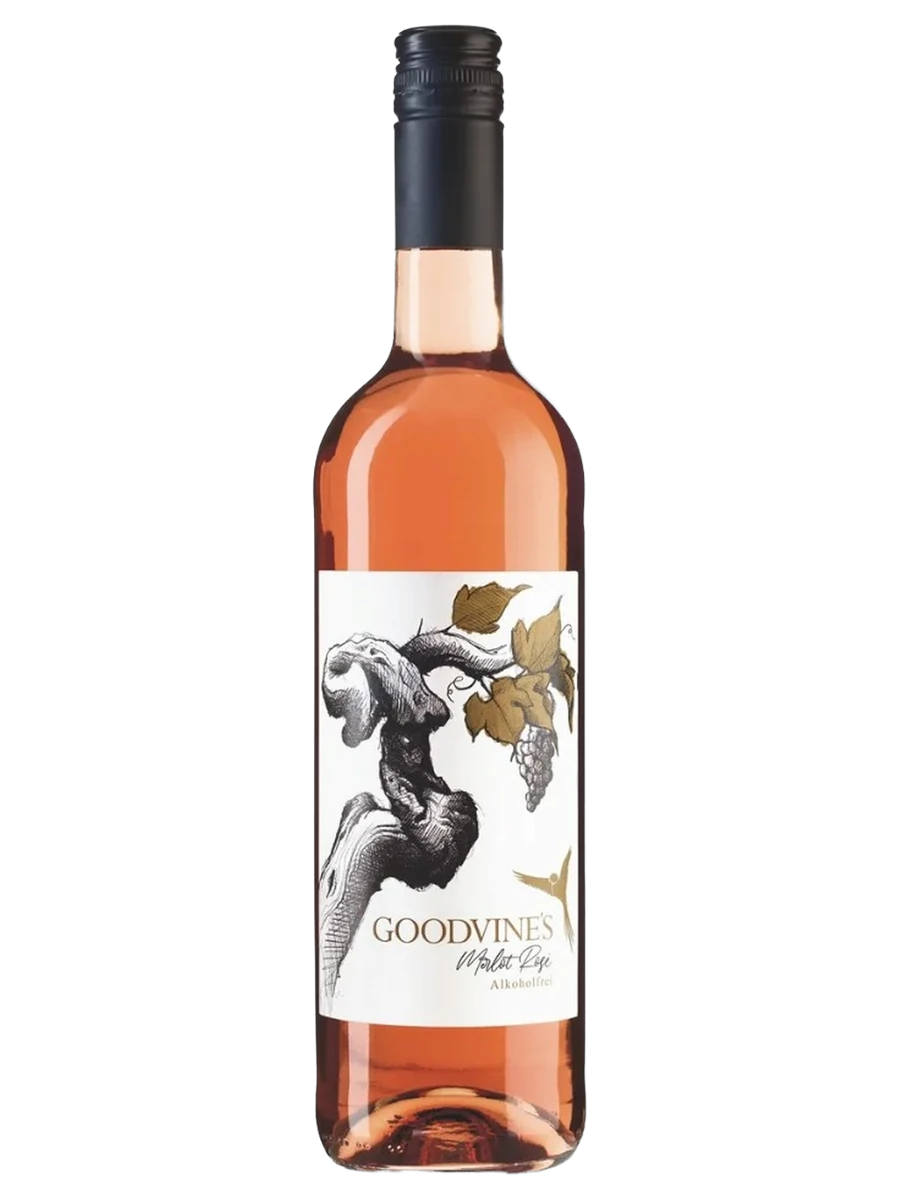
GoodVines Non-Alcoholic Merlot Rosé
80/100
How we scoreVerdict
Editorial VerdictSoft Merlot pink — raspberry and redcurrant with a rhubarb lift, light herbal edge, balanced acid, then a fresh slightly tart finish. Eighty for soft fruit and balance, not for depth.
Verified facts
Evidence: Producer documented · 3 sources
- Sourced ABV 0.0% Producer documentation
- Sourced Classification Dealcoholized Producer documentation
- Sourced Method Vacuum distillation Producer documentation
- Sourced Origin Hungary Retail listing
At a glance
- Flavor profile
- Raspberry
- Red currant
- Rhubarb
- Herbal / botanical
- Structure
- Off-dry
- Moderate acidity
- No tannin
- Light body
- Short finish
- Rounded
- Still
Tasting notes
-
Nose
Raspberry, redcurrant, and rhubarb — berry-fruit with a soft rhubarb edge, light floral and herbal spice underneath, fresh rather than candied.
-
Palate
Soft red fruit from the first sip. Raspberry and redcurrant carry the mid-palate on a light frame; balanced acidity keeps it from flat or soda-sweet. A light herbal edge adds lift. Fruit leads; residual sugar rounds without sticking.
-
Finish
Fresh and slightly tart — clears cleanly, leaving a short red-fruit edge without sticky hang or sweetness.
The wine
Soft first. The glass is salmon and the sip is gentle before it is sharp — raspberry and redcurrant, a rhubarb lift, then a light herbal edge that keeps the fruit from reading as candy. That is the bargain of this Merlot pink: soft structure over taut Provençal line, fruit over mineral theater.
Balanced acidity holds the mid-palate without flashing bright. The fruit stays soft and rounded; residual sugar rounds the edges without turning sticky. A faint herbal spice sits under the berry line and keeps the glass from one-note sweetness. What remains is fresh and slightly tart — short, clean, no hang. The close does not stretch; it does not need to.
Eighty sits on honesty: berry fruit that still smells like fruit, a soft frame that empties easily, and a lightly tart finish that clears. It will not give you taut mineral length or deep mid-palate weight — and it does not pretend to. Serve it well chilled in a white-wine glass; a few minutes open helps. Warm, the herbal note fattens and the tart edge softens; cold keeps the raspberry bright. For antipasto or a patio pink, that soft slightly tart line is the point.
How to drink it
Well chilled (8–10 °C); a few minutes open helps.
How it was made
Classification Dealcoholized
Evidence status Producer documented
Merlot grapes; ingredients: dealcoholized wine, rectified grape must concentrate, carbonic acid; SO₂ (producer DE shop). DE shop Origin: Hungary. ProofNoMore US copy says German de-alcoholized — see discrepancies.
Sources disagree on the following points.
- Country: Country field follows producer DE shop (Hungary). Brand is Heidelberg-based.
Product record history
Sourced changes and open disagreements. Prior claims stay on the record when sources conflict.
Product record history
- Reviewed and published.
- Abv — Sourced check for abv.
- Production_type — Sourced check for production_type.
- Dealcoholization_method — Sourced check for dealcoholization_method.
- Open Country — Country field follows producer DE shop (Hungary). Brand is Heidelberg-based.
Sources
Product facts are only as strong as their sources. Editorial tasting notes are opinion.
-
Verified facts
-
Verified facts
-
Verified facts
-
Verified facts
Keep tasting
Other Rosé


80/100
How we score