
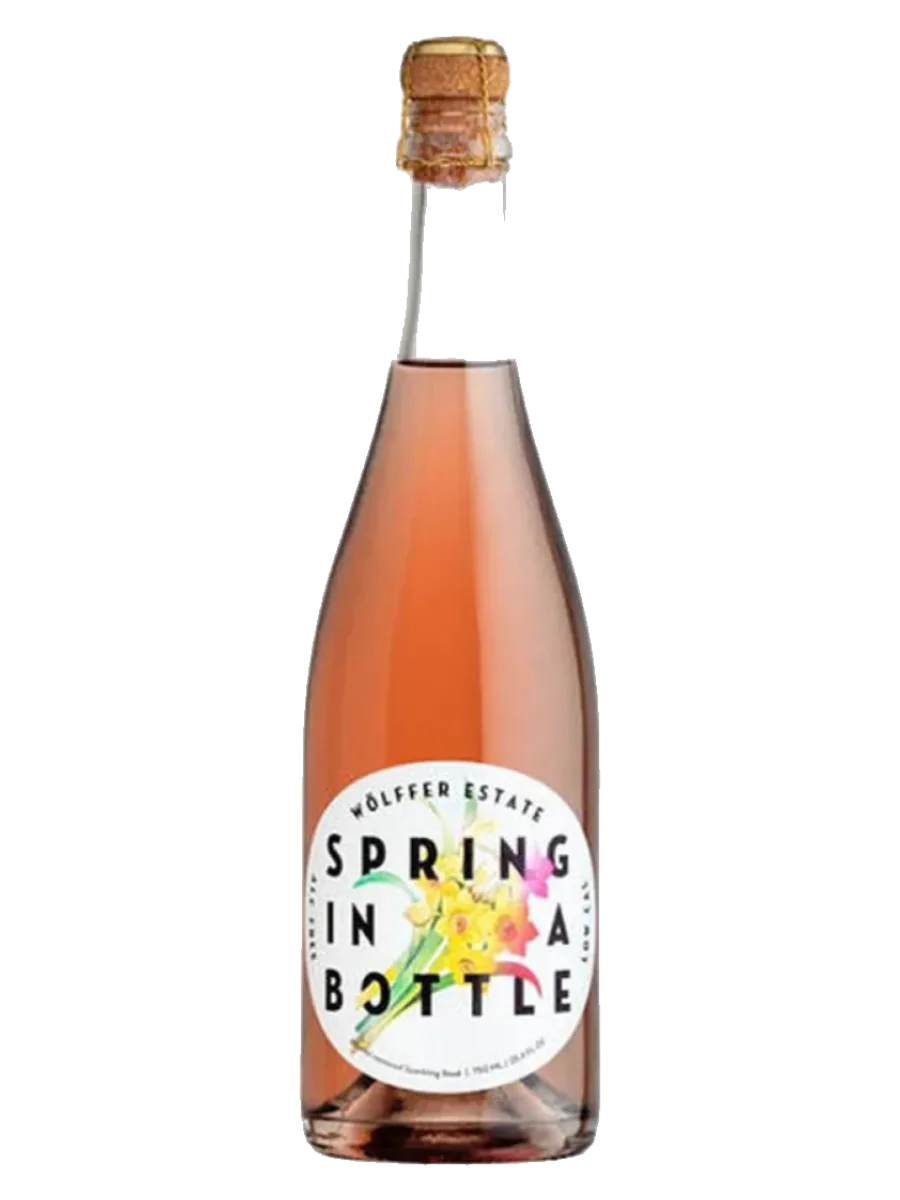
Spring in a Bottle Rosé Sparkling
82/100
The short takeRed berry, ripe peach, fresh pear — vibrant acidity, clean earthy finish. More wine than soda.
Tasted Karl HillHow we score
Serve Well chilled.
Who it’s for The nicer toast on this list.
Try instead
-
Sparkling Rosé
A higher-scoring bottle in this style
BOLLE Sparkling Rosé sits at 87 in the same style. It has less carbonation.
Compare -
Sparkling Rosé
A higher-scoring bottle in this style
Hollow Leg Sparkling Rosé sits at 84 in the same style. It has more carbonation.
Compare -
Sparkling Rosé
A higher-scoring bottle in this style
Sinzero Sparkling Rosé sits at 84 in the same style. It has more carbonation.
Compare
In the glass
- Nose
- Red berry, ripe peach, fresh pear.
- Palate
- Vibrant acidity, elegant fruit, a finer mouthfeel than the nonalcoholic pinks.
- Finish
- Clean, a little earthy. More wine than soda.
Structure and likeness Show Hide
Structure
- Acidity
- Bright acidity
- Carbonation
- Soft bead
- Finish length
- Short finish
How wine-like is it?
Separate from the score. A convincing resemblance is not a higher rating.
The acid does the wine work. Red berry, ripe peach, and pear stay vivid, and the mouthfeel is finer than the usual alcohol-removed pink. A little earth on the close keeps it on the wine side of soda.
The wine
Pour it well chilled for the table — sparkling rosé weather, not a cellar exam. Red berry, ripe peach, and fresh pear open the glass. Vibrant acidity keeps the fruit elegant rather than soft-drink sweet, and the mouthfeel reads finer than the cheap nonalcoholic pinks that collapse into soda. Soft bead carries the sip. This is an occasion pour: cold fizz, berry and stone fruit, acid that keeps the glass upright.
Finish is clean, a little earthy — more wine than soda. Red berry leads; peach and pear fill out the middle; acidity keeps sweetness from taking over. The earthy close is quiet, but it is what stops the pour from tasting like candy. Soft bead, bright acid, clean exit.
Chill hard and serve it where sparkling pink belongs. Bright acidity, soft bead, clean finish — berry-peach-pear in the aroma, elegant fruit on the sip, earthy close. No candy perfume, no soda collapse: wine-shaped sparkling rosé for the table, poured cold. Occasion first; fruit second; earthy clean exit last. Red berry, peach, pear — then the earthy flick that keeps it honest. Cold fizz for the table: berry, peach, pear, then clean earth.
82 is typical of the 19 dealcoholized Sparkling rosé bottles we've tasted.
The bottle
Trade record, where to buy, and product facts.
Show
Hide
Vacuum rectification at 77°F after filtration, with aromatics blended back; balanced with minimal organic sugar, sparged with CO2, and bottled.
Research notes
Current official 2023 technical sheet documents short skin maceration, gentle whole-cluster pressing, slow cool stainless-steel fermentation, short lees aging, filtration, vacuum rectification at 77°F with aromatics blended back, minimal organic sugar for balance, CO2 sparging, and bottling beginning in March 2024.
Where to buy
- Wölffer Estate
- Package
750 ml
$20.00 — Wölffer Estate (observed 2026-10-19)
- Also listed
- Wölffer Estate · Producer
- Availability
Available from Wölffer Estate at observation.
Prices and availability are independently observed and may change. Retailer listings do not imply endorsement. A different package is labeled as a different format. Reader-service exceptions and commercial links are identified above; neither affects scores, rankings, classification, verification, or editorial coverage.
Product facts
- Producer
- Wölffer Estate (Sagaponack, NY); produced in partnership with the Strauch Family in Rheinhessen, Germany
- Origin
- Rheinhessen, Germany
- Vintage
- 2023
- Grapes
- 75% Pinot Noir, 15% Saint Laurent, 10% field blend of Merlot and Cabernet Sauvignon; organically grown
- Residual sugar
- 42 g/L
- Base beverage
- 2023 organically grown rosé wine: 75% Pinot Noir, 15% Saint Laurent, and 10% field blend of Merlot and Cabernet Sauvignon
- Bottle / can
- 750 ml
Sources disagree on Origin and ABV. Send a correction
Sources & verification
Show details
Hide details
Source links leave this site and open in a new tab.
Where sources disagree
Sources disagree on the following points.
- Origin: Total Wine's highlight copy says Germany; the brand is Wölffer Estate of New York. Resolved: Wölffer Estate is the Sagaponack, NY brand, which partnered with a winery in Rheinhessen, Germany to produce this wine — both are accurate, describing brand versus production origin. Living wolffer.com/pages/no-low-alc restates the German partnership.
- ABV: The current official 2023 technical sheet states 0.2% ABV. The current product page’s wine specs state 0.5, while the description says less than 0.5%. The profile retains the technical sheet’s exact 0.2% declaration. This difference is unresolved; no rounding convention or formulation change is inferred. The historical Total Wine listing printed 0.0%, but was blocked/unreachable when checked on 2026-09-21.
Evidence at a glance
- Producer documented11 facts
- Bottle verified1 fact
- Retailer sourced4 facts
- Historical documentation1 fact
Sources
-
Producer wolffer.com
- ABV (sources disagree)
- Country
- Price
- Volume
- Producer
- Region
- Production
- Method
- Ingredients
- Grapes
- Nutrition
Note
- ABV
- The difference remains unresolved; the page’s figure is not assumed to be a rounded threshold.
-
Bottle / can label Bottle label
- Barcode (EAN/GTIN)
Note
- Barcode (EAN/GTIN)
- Barcode recorded from packaging or producer listing
-
Producer Producer
- Availability
Note
- Availability
- Source URL unreachable; no living replacement found on 2026-10-04.
Product record history Sourced changes and open disagreements. Prior claims stay on the record when sources conflict.
- ReviewedReviewed and published.
- UpdatedCatalog record updated from sourced research.
- OpenDiscrepancyOrigin and ABV.
Production
Compare another production approach
-
Le Rosé
French Bloom Le Rosé is a hybrid. This bottle is dealcoholized by vacuum distillation.
Compare -
Yamilé
MURI Yamilé is an alternative. This bottle is dealcoholized by vacuum distillation.
Compare -
Sparkling Rosé
Surely Sparkling Rosé is a hybrid. This bottle is dealcoholized by vacuum distillation.
Compare
82/100