
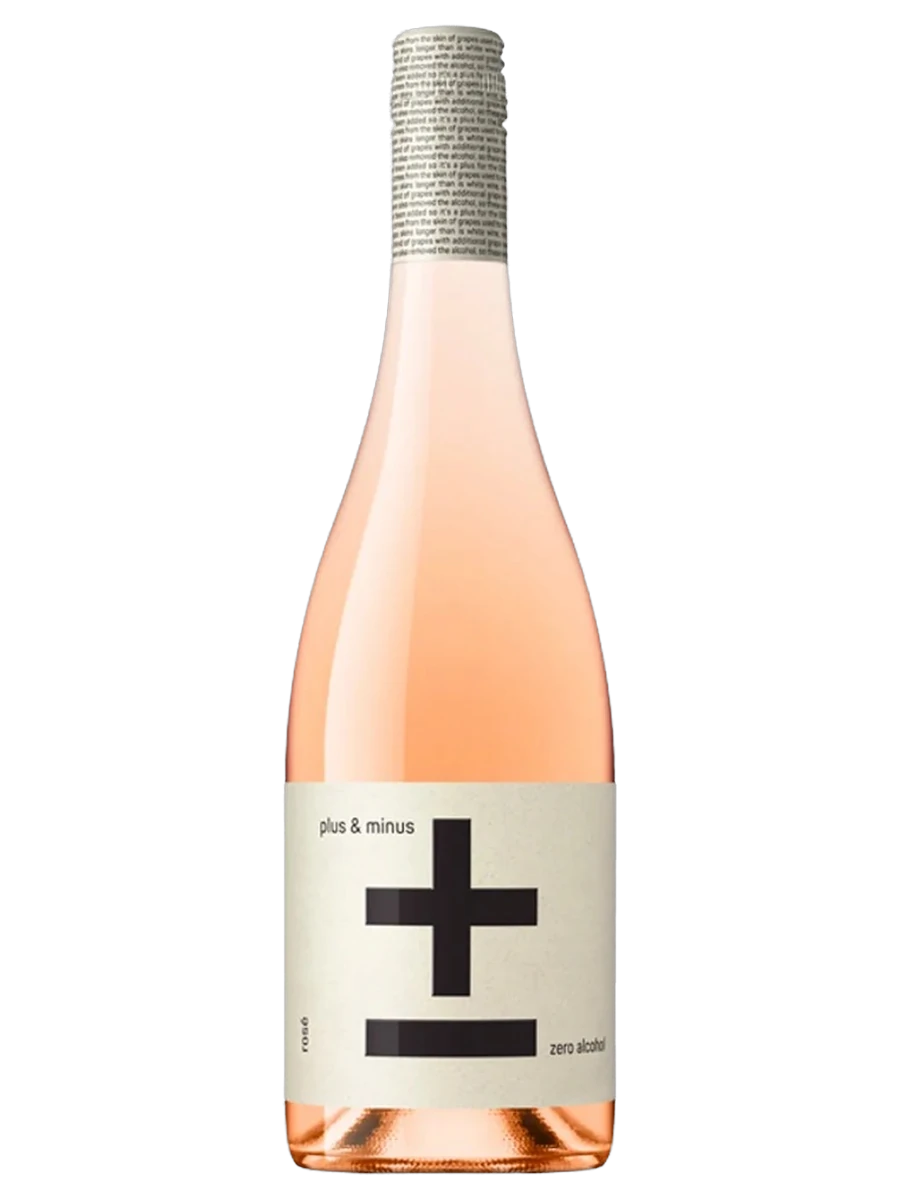
PLUS & MINUS Non-Alcoholic Rosé
80/100
How we scoreVerdict
Editorial VerdictLight and juicy rather than weighty — strawberry and apricot with a rose lift, then a dry-leaning savory red-fruit close. Eighty for freshness and drinkability, not for depth.
Verified facts
Evidence: Producer documented · 5 sources
- Sourced ABV <0.5% Retail listing
- Sourced Classification Dealcoholized Producer documentation
- Undeclared Method Technique undeclared Not disclosed
- Sourced Origin South Australia, Australia Retail listing
At a glance
- Flavor profile
- Strawberry
- Rose
- Apricot
- Red berry
- Structure
- Dry
- Bright acidity
- No tannin
- Light body
- Short finish
- Crisp
- Still
Tasting notes
-
Nose
Strawberry, rose, and apricot — berry-floral with a soft stone-fruit edge, fresh rather than candied or perfume-heavy.
-
Palate
Light and juicy from the first sip. Strawberry and apricot carry the mid-palate on a lean frame; bright acidity keeps it from soft or soda-sweet. Dry-leaning rather than bone-dry — fruit leads, residual sugar does not stick.
-
Finish
Dry-leaning, savory, and red-fruit — clears without sticky hang, leaving a faint savory edge on the close.
The wine
Juicy first. The glass is light before it is serious — soft strawberry and apricot, bright acid, no weight pretending to be there. That is the bargain of this pink: drinkability over density, fruit over structure theater.
Rose lifts the nose without tipping into perfume. On the sip, strawberry and apricot stay juicy rather than jammy; acidity keeps the line dry-leaning instead of candy-sweet. There is no mid-palate weight to lean on — the fruit and acid do the work, and that is enough for a patio pour. What remains is short and savory — red fruit with a faint edge, then clean. The close does not stretch; it does not need to.
It will not give you Provençal tautness or a long mineral close. Eighty sits on honesty: fruit that still smells like fruit, a light frame that empties easily, and a dry-leaning finish that does not stick. Serve it well chilled in a white-wine glass. Warm, the apricot softens and the savory note fattens; cold keeps the strawberry bright. For antipasto or a warm afternoon pink, that light juicy line is the point.
How to drink it
Well chilled, white-wine glass.
How it was made
Classification Dealcoholized
Evidence status Producer documented
Pinot Noir from dry-grown South Australian vineyards; grape skin extract added; no artificial sweeteners (Fourth Wave / brand copy). Some retailers name Adelaide Hills.
Method: Sources disagree — Ultra Membrane (retailer brand quote) vs high-vacuum low-pressure distillation (Fourth Wave brand page); see discrepancies
Sources disagree on the following points.
- Dealcoholization_method: Method facet left undeclared until one producer technical statement resolves the conflict.
- Abv: Public record uses <0.5%.
Product record history
Sourced changes and open disagreements. Prior claims stay on the record when sources conflict.
Product record history
- Reviewed and published.
- Production_type — Sourced check for production_type.
- Open Dealcoholization_method — Method facet left undeclared until one producer technical statement resolves the conflict.
- Open Abv — Public record uses <0.5%.
Sources
Product facts are only as strong as their sources. Editorial tasting notes are opinion.
-
Producer: alcohol is removed from finished South Australian wine; grape skin extract added.
Verified facts -
Verified facts
-
Verified facts
-
Verified facts
-
Verified facts
-
Verified facts
Keep tasting
Other Rosé

80/100
How we score