
Cuvée Rouge No. 3
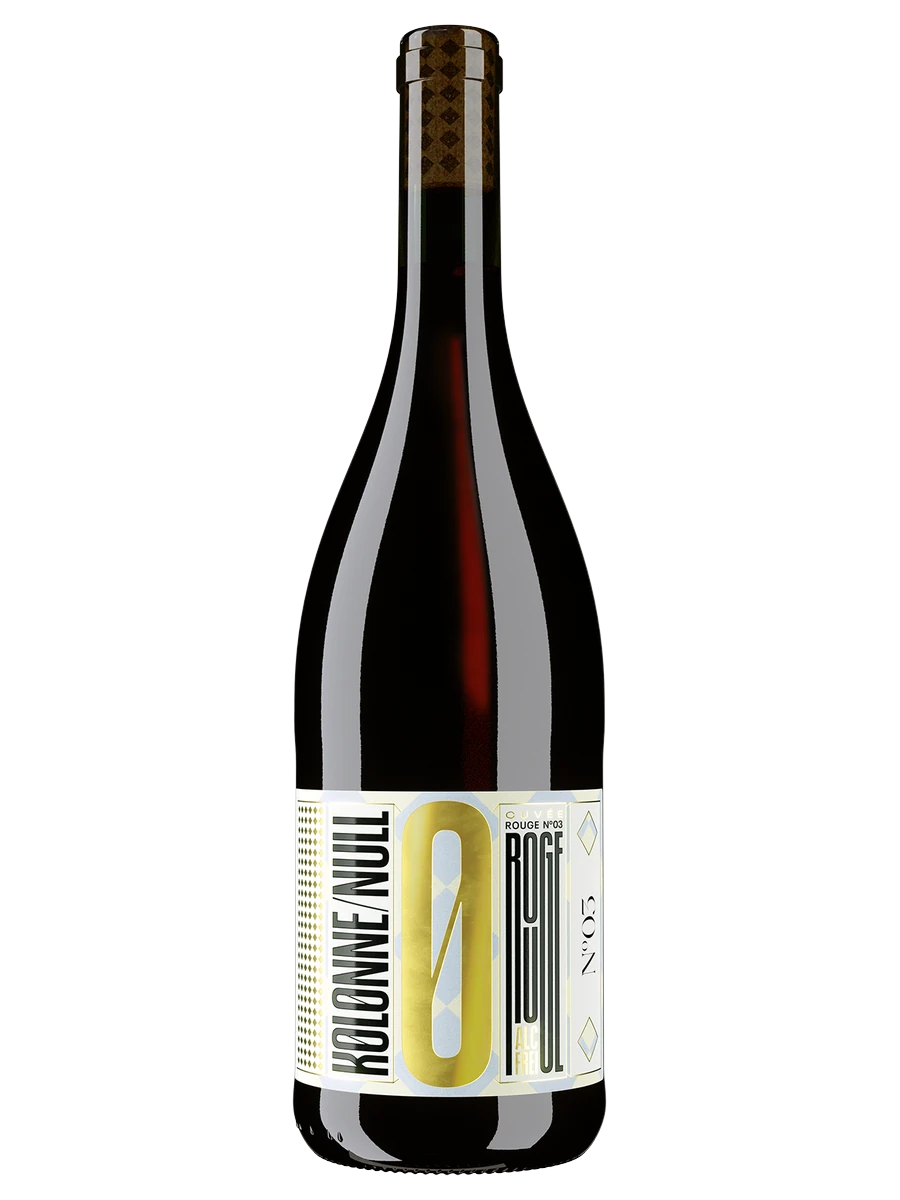
Research record Product facts researched. Not tasted or scored.
Research record
Product facts researched. Not tasted or scored.
The wine
What it is. Kolonne Null’s Bordeaux cuvée, made with Château Le Grand Verdus — a Merlot and Cabernet blend. The producer’s launch release names both varieties without specifying which Cabernet, so the blend composition stays at that level of precision rather than being narrowed by guesswork.
How it is made. Kolonne Null’s manufacturer-supplied release identifies this as its Le Grand Verdus collaboration from Bordeaux. Retailer ingredient text explicitly lists dealcoholized wine. The producer’s manufacturing page documents vacuum distillation at around 30°C with aroma recovery — a range-level account, not an independently established condition for this numbered cuvée. That distinction is why this record keeps the production classification at documented rather than manufacturer-verified: an exact-product process sheet or readable back label has not been located.
Alcohol. Exact-product retailer Amavine declares under 0.5% ABV. It is a retailer declaration, not an independently measured residual, and no producer figure is published for this specific cuvée.
What remains open. Ingredients disagree across three sources — Boisson page text names rectified concentrated grape must while its own artwork names sucrose, and Amavine adds sulfite E229 and dimethyl dicarbonate E242. Nutrition is given as 15 kcal and 2.4 g sugar per 375 ml on one label and the same figures per 100 ml elsewhere; the serving bases contradict each other, so neither is reconciled. Stock status is also unresolved: the product page shows a back-in-stock notice while the product-data endpoint reports the variant available. No canonical values are published for ingredients, nutrition or availability.
Not yet tasted. No firsthand Dry Standard pour has been recorded, so this carries no sensory observations and no score.
The bottle
Production Dealcoholized
Evidence Producer documented
Production type describes how it is made, not how it tastes. What this classification means.
Method Vacuum distillationVacuum distillation at around 30°C with aroma recovery (producer range-level statement; exact No. 3 specification unconfirmed)Verified from producer documentation · Oct 2026
Research notes
Kolonne Null’s manufacturer-supplied launch release identifies No. 3 as its Le Grand Verdus collaboration from Bordeaux, using Merlot and Cabernet. Retailer ingredients explicitly identify dealcoholized wine. Classification is retained with verified: no because an exact-product primary process sheet or readable back label has not been located. The producer’s manufacturing page documents vacuum distillation with aroma recovery at range level; those conditions are not independently established for this numbered cuvée.
Where to buy
- Package
750 ml
- Typical price
-
$29.00 / 750 ml
- Availability
Boisson lists the bottle at $29.00; its page and product data disagree on stock status as checked 2026-10-13.
Prices and availability are independently observed and may change. Retailer listings do not imply endorsement. A different package is labeled as a different format. Reader-service exceptions and commercial links are identified above; neither affects scores, rankings, classification, verification, or editorial coverage.
Product facts
- Producer
- Kolonne Null, in collaboration with Le Grand Verdus
- Base beverage
- Merlot and Cabernet red wine
- Bottle / can
- 750 ml
Sources disagree on Ingredients, Nutrition, and Availability.
Sources & verification
Show details Hide details
Source links leave this site and open in a new tab.
Where sources disagree
Sources disagree on the following points.
- Ingredients: Boisson page text names dealcoholized wine, rectified concentrated grape must, carbon dioxide and sulfur dioxide; its No. 3 artwork names sucrose instead of grape must. Amavine names grapes, concentrated grape must, sulfite labelled E229, and dimethyl dicarbonate E242. No corrected additive code or lot-specific ingredient list is inferred; the canonical field is omitted.
- Nutrition: Boisson’s No. 3 artwork pairs a 375 ml serving with 15 kcal and 2.4 g sugar. Amavine declares 15 kcal and 2.4 g sugar per 100 ml. The serving bases disagree. Canonical calories and sugar are omitted until an exact label or technical sheet resolves them.
- Availability: The opened Boisson product page displays a back-in-stock notification, while the live product-data endpoint reports available true for the product and single-bottle variant. The observation is retained with stock status unknown.
Evidence at a glance
- Bottle verified3 facts
- Producer documented2 facts
- Press sourced4 facts
- Retailer sourced5 facts
Sources
-
Note
- Ingredients
- Boisson listing now shows only a front shot and a lifestyle photo; no back-label panel was found to confirm the ingredient statement. The other source (Amavine) is a retailer, insufficient for ingredients.
-
2 notes
- Production
- The producer documents its own de-alcoholization programme as the basis of the range (how they de-alcoholize, over 1000 wines trialled, vacuum rectification among assessed thermal separation methods). Exact-product retailer ingredient text independently confirms dealcoholized wine in this SKU; primary exact-product process documentation remains outstanding.
- Method
- Producer range-level manufacturing account only; do not read this as a batch-specific No. 3 statement.
-
Note
- Base beverage
- Manufacturer-supplied launch release names Merlot and Cabernet without specifying the Cabernet variety.
-
2 notes
- Barcode (EAN/GTIN)
- Variant barcode only; no independent packaging verification.
- Availability
- Conflicts with the product-page back-in-stock notification; no resolved inventory claim.
-
Note
- ABV
- Exact-product retailer declaration of less than 0.5%, not an independently measured residual.
Product record history Sourced changes and open disagreements. Prior claims stay on the record when sources conflict.
- ResearchedResearch record. Product facts researched. Not tasted or scored.
- UpdatedCatalog record updated from sourced research.
- OpenDiscrepancy · IngredientsBoisson page text names dealcoholized wine, rectified concentrated grape must, carbon dioxide and sulfur dioxide; its No. 3 artwork names sucrose instead of grape must. Amavine names grapes, concentrated grape must, sulfite labelled E229, and dimethyl dicarbonate E242. No corrected additive code or lot-specific ingredient list is inferred; the canonical field is omitted.
- OpenDiscrepancy · NutritionBoisson’s No. 3 artwork pairs a 375 ml serving with 15 kcal and 2.4 g sugar. Amavine declares 15 kcal and 2.4 g sugar per 100 ml. The serving bases disagree. Canonical calories and sugar are omitted until an exact label or technical sheet resolves them.
- OpenDiscrepancy · AvailabilityThe opened Boisson product page displays a back-in-stock notification, while the live product-data endpoint reports available true for the product and single-bottle variant. The observation is retained with stock status unknown.
Price
Under $25
-
Cabernet Sauvignon
Appalina Cabernet Sauvignon scored 77 at €7.38, under $25.
Compare -
Cabernet Sauvignon
Clearscape Cabernet Sauvignon scored 77 at $8.99, under $25: $20 less than this bottle.
Compare -
Vanish Red Blend
Magic Box Vanish Red Blend scored 77 at $9-10, under $25: $20 less than this bottle.
Compare