
Riesling
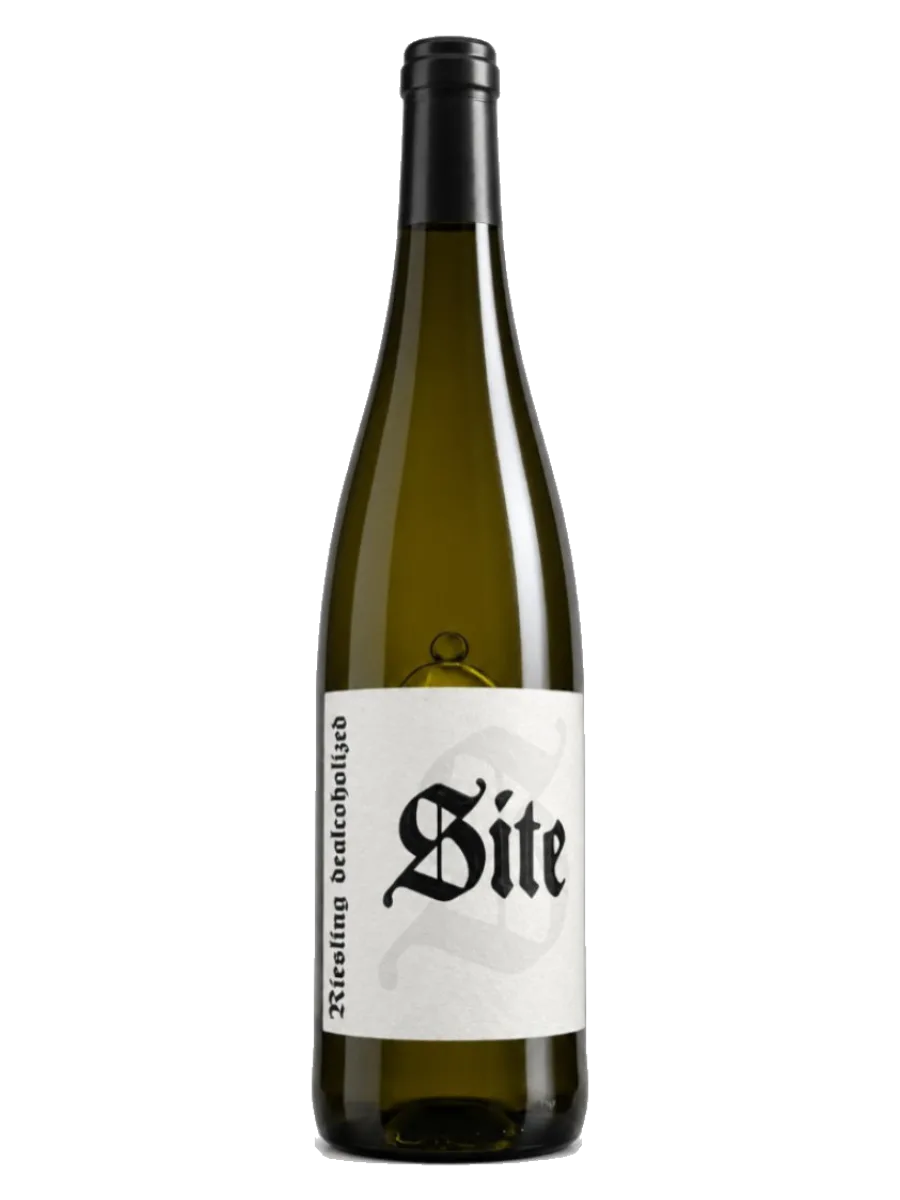
81/100
The short takeA solid, wine-like dealcoholized Riesling — bright acid, clear fruit, with the must and concentrate showing as extra sweetness and a softer mid-palate. More convincing than most nonalcoholic whites; not as dry or structured as a traditional Mosel.
Tasted Karl HillHow we score
Serve Well chilled, in a white-wine glass.
Who it’s for Weeknight fish, spicy takeout, or the Mosel drinker who will accept off-dry for a wine-shaped glass without ethanol.
If you like Off-dry Mosel Riesling or Fruit-forward nonalcoholic whites.
Try instead
-
Riesling Nr. 420
A higher-scoring bottle in this style
Weinkönig Riesling Nr. 420 sits at 84 in the same style. It has stronger acidity.
Compare -
Steinbock Riesling Zero Sparkling
A higher-scoring bottle in this style
Dr. Fischer Steinbock Riesling Zero Sparkling sits at 83 in the same style. It has stronger acidity.
Compare -
Eins-Zwei-Zero Riesling
A higher-scoring bottle in this style
Leitz Eins-Zwei-Zero Riesling sits at 88 in the same style.
Compare
In the glass
- Nose
- fruit-led: green apple and pear, lemon, white peach, a light floral lift, and a faint slate line underneath. It smells like Mosel fruit more than cordial.
- Palate
- the wine is light-bodied and crisp. Apple, pear, citrus, and peach arrive early, and the acidity keeps the sip lively rather than flat. Balance is the fight: acid does the Mosel work, but the must and concentrate push sweetness and a softer, slightly juice-like roundness through the mid-palate. Mouthfeel starts precis….
- Finish
- Medium-short. Tart apple and lemon, with peach sweetness hanging on. A mild mineral dryness cleans the end; a soft concentrate note stays on the back.
Structure and likeness Show Hide
Structure
- Sweetness
- Off-dry
- Acidity
- Bright acidity
- Body
- Light body
How wine-like is it?
Separate from the score. A convincing resemblance is not a higher rating.
More wine than juice — Riesling fruit and acid carry the glass. The must and concentrate still show as sweetness and softness, so it is less dry and less structured than a traditional Mosel.
The wine
Balance is the fight here: Mosel acid against the sweetness and soft roundness the must and concentrate push through the middle.
Light-bodied and crisp on entry. Then the rebuild shows: a softer, slightly juice-like mid-palate where sweetness rounds what a drier Mosel would leave lean. Mouthfeel starts crisp and light, then that rounded middle arrives. Off-dry enough to notice; bright acid enough to argue back. Highlight of the glass: acidity keeps the fruit lively even while the rebuild sweetens and softens the middle.
Finish is medium-short — tart apple and lemon, peach sweetness hanging on, a mild mineral dryness cleaning the end, and a soft concentrate note on the back. More wine than juice. The fruit and acid carry the glass; the must and concentrate still show as sweetness and softness, so it is less dry, and less taut, than a traditional Mosel. Well chilled, white-wine glass.
81 is typical of the 19 dealcoholized Riesling bottles we've tasted.
The bottle
Trade record, where to buy, and product facts.
Show
Hide
Research notes
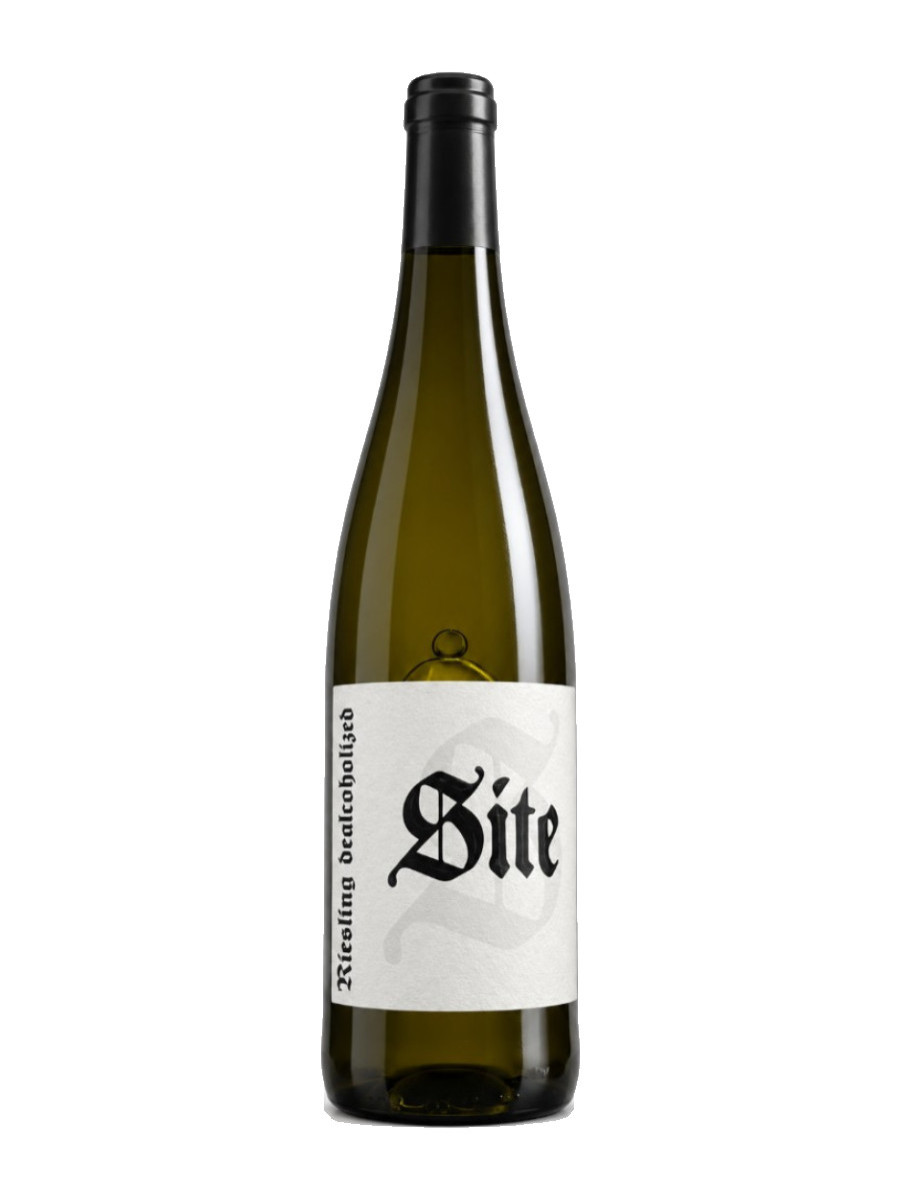
The SITE front label explicitly states Riesling Dealcoholized and directly supports that production classification.
Where to buy
- Package
750 ml
$14.99 (750 ml bottle) — ShopWineDirect, US
- Availability
US retail (purchased 2026-09-19). Imported by Constantine Wines Inc., Columbia, Maryland (back label).
Prices and availability are independently observed and may change. Retailer listings do not imply endorsement. A different package is labeled as a different format. Reader-service exceptions and commercial links are identified above; neither affects scores, rankings, classification, verification, or editorial coverage.
Product facts
- Producer
- Dr. Pauly-Bergweiler
- Origin
- Mosel, Germany
- Residual sugar
- 35.6 g/L
- Base beverage
- 100% Riesling wine, fermented then dealcoholized
- Bottle / can
- 750 ml
Sources disagree on Producer, Product, ABV, Sugar, Ingredients, and Method. Send a correction
Sources & verification
Show details
Hide details
Source links leave this site and open in a new tab.
Where sources disagree
Sources disagree on the following points.
- Producer: The stored producer, Dr. Pauly-Bergweiler, comes from the importer sheet for the matching barcode. The SITE back label says only German dealcoholized wine bottled in Ürzig, distr. Dr. Pauly-Bergweiler, D-Bernkastel/Mosel, imported by Constantine Wines Inc., Columbia, MD. It does not say who made the wine or whether Pauly-Bergweiler bottled it.
- Product: The barcode on this bottle matches Dr. Pauly-Bergweiler Noble House Riesling Alcohol Free on the Winesellers Ltd. listing and fact sheet. Matching technical specs (Mosel Riesling, low-temperature alcohol removal, residual sugar in the mid-30s g/L) strongly suggest SITE is an alternate or private-label presentation of the same wine. The producer has not published an explicit statement tying the SITE label to Noble House, so the relationship is not treated as confirmed.
- ABV: The SITE bottle prints <0.5% ABV. The Winesellers fact sheet for the matching UPC prints <0.03% by vol. This review prints <0.5% from the bottle and records the sheet figure.
- Sugar: SITE bottle nutrition: 18 kcal / 100 ml, 3.4 g carbohydrate / 100 ml, 3.3 g sugar / 100 ml (~33 g/L; ~135 kcal per 750 ml). Noble House sheet: 35.6 g/L residual sugar. Extremely close on sugar; bottle nutrition is from the SITE label in this cellar, not reprinted on the sheet.
- Ingredients: SITE bottle ingredients: dealcoholized wine, grape must, grape juice concentrate. That is fermented Riesling with ethanol removed, then grape-derived material used to rebuild sweetness/body/flavor. The Winesellers Noble House sheet does not reprint that ingredient line.
- Method: The Noble House distributor sheet says the wine is gently heated to a maximum of 27°C so the alcohol evaporates. It does not identify the equipment or confirm the SITE private-label relationship. The previous suggestion of vacuum distillation has been removed; no machine or pressure regime is inferred from temperature.
Evidence at a glance
- Bottle verified7 facts
- Distributor sourced2 facts
- Retailer sourced7 facts
- Unverified1 fact
Sources
-
Bottle / can label Bottle label
- ABV (sources disagree)
- Sugar (sources disagree)
- Ingredients (sources disagree)
- Barcode (EAN/GTIN)
- Calories
- Importer
2 notes
- ABV
- Rechecked 2026-09-25.
- Barcode (EAN/GTIN)
- Barcode read from the back label and matches the stored identifier; the EAN check digit validates.
-
Distributor / importer Distributor / importer
- Method (sources disagree)
-
Note
- Method
- Equipment and applicability to SITE are not established.
-
Retail listing winesellersltd.com
- Producer (sources disagree)
- Country
- Region
- Volume
- Base beverage
-
Note
- Price
- Observation date backfilled from price research ledger (observed 2026-09-20).
-
Cited source Cited source
- Verified
Additional sources
Product record history Sourced changes and open disagreements. Prior claims stay on the record when sources conflict.
- ReviewedReviewed and published.
- UpdatedCatalog record updated from sourced research.
- Classification changed · ClassificationCorrected from no to yes. The photographed SITE label is primary evidence for Dealcoholized; method and Noble House identity remain separate questions.
- Method verified · MethodCorrected from Low-temperature evaporation — likely vacuum distillation (gently heated to a maximum of 27°C so the alcohol evaporates; equipment not named) to Undeclared for SITE; the matching-barcode Noble House importer sheet describes alcohol evaporation at up to 27°C, without naming equipment.. Reopened the importer sheet. It names evaporation and a maximum temperature, not vacuum distillation. SITE-to-Noble-House equivalence remains unconfirmed.
- OpenDiscrepancyProducer, Product, ABV, Sugar, Ingredients, and Method.