
Verdejo 2023
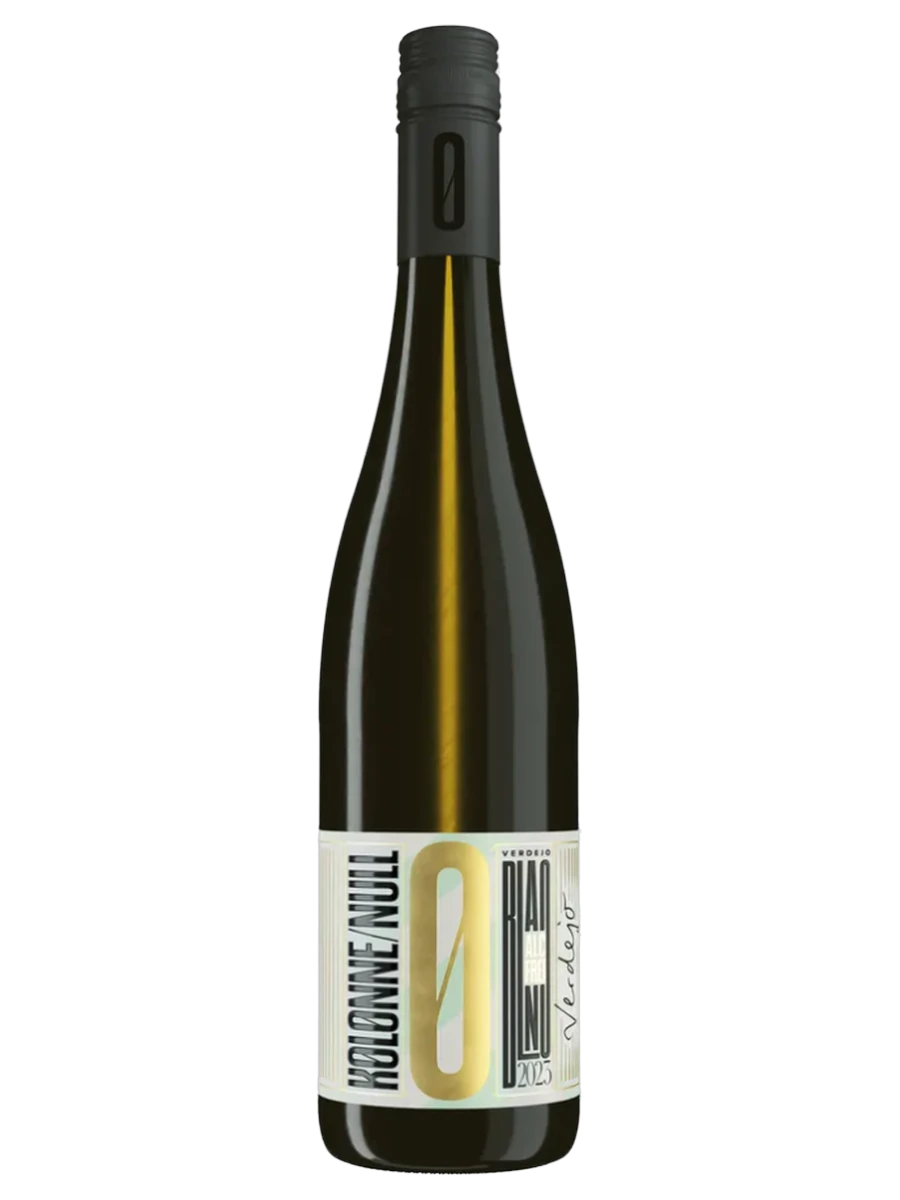
87/100
The short takeA balanced, satisfying dealcoholized Verdejo. Gentle sweetness and rounded texture complement fresh acidity, while the persistent melon finish gives it staying power. It feels complete and invites another sip.
Tasted Karl HillHow we score
In the glass
-
Appearance
Light straw yellow.
-
Nose
Fresh-fruit aromas are noticeable but restrained, reminiscent of peach or melon.
-
Palate
Light-bodied and gently rounded, with melon flavors and a subtle touch of sweetness. The overall impression is dry. Noticeable acidity leaves the mouth watering, especially after swallowing.
-
Finish
Melon flavor lingers after swallowing, accompanied by continued mouthwatering acidity.
How wine-like is it?
Convincingly white-wine-like, with gentle roundness, subtle sweetness and mouthwatering acidity forming a balanced whole. The overall dry impression and lingering melon flavor give this light-bodied wine a satisfying sense of completeness.
Structure
- Dry
- Bright acidity
- Light body
- Long finish
- Rounded
The wine
The texture is gently rounded, but the overall impression stays dry. This Verdejo carries a subtle sweetness alongside its melon flavor, with fresh acidity giving the sip a mouthwatering edge. Its light body keeps the roundness gentle. Sweetness, texture and acidity complement one another, making a satisfying glass that feels complete without needing more weight.
Fresh fruit is noticeable in the aroma, though restrained in intensity, bringing peach or melon to mind. Light straw yellow in the glass, the wine has a quiet aromatic presence that fits its gently rounded palate. The clearer melon flavor arrives in the sip, where the subtle sweetness supports the fruit while the overall dry impression holds. That combination gives it an appealing balance: rounded enough to feel satisfying, with acidity that remains fresh and noticeable.
After swallowing, melon continues alongside the mouthwatering sensation. The finish gives the wine staying power, carrying both fruit and acidity beyond the sip. This is an especially enjoyable dealcoholized Verdejo for the way its parts work together. Gentle sweetness, rounded texture and fresh acidity make a coherent whole, and the lingering melon finish invites another sip.
The bottle
Production Dealcoholized
Evidence Bottle verified
Production type describes how it is made, not how it tastes. What this classification means.
Method Vacuum distillationVacuum distillation (producer range-level FAQ; not a vintage-specific batch specification)Verified from producer documentation · Oct 2026
Research notes
The physical 2023 bottle declares alcohol-removed white wine below 0.5% ABV and lists dealcoholized wine as its first ingredient. Kolonne Null's producer-issued 2023 e-label identifies the grape as Verdejo and the wine origin as Spain. The physical US label states Product of Germany; both declarations are retained in the evidence record. The producer's current range-level FAQ documents fermentation followed by vacuum distillation and rectified grape-must back-addition. This is a range-level process statement, not an exact-batch specification for the tasted bottle. Standard must back-addition after removal keeps the classification Dealcoholized.
Where to buy
- Package
750 ml
- Recorded price
$21.00 (750 ml, sale) — Boisson, US (observed 2026-10-18)
Prices and availability are independently observed and may change. Retailer listings do not imply endorsement. A different package is labeled as a different format. Reader-service exceptions and commercial links are identified above; neither affects scores, rankings, classification, verification, or editorial coverage.
Product facts
- Producer
- Kolonne Null
- Base beverage
- Spanish Verdejo wine
- Bottle / can
- 750 ml
Sources disagree on Country, Calories, Sugar, and Ingredients.
Sources & verification
Show details Hide details
Source links leave this site and open in a new tab.
Where sources disagree
Sources disagree on the following points.
- Country: The physical 2023 bottle states Product of Germany. The producer-issued 2023 e-label identifies Spain as the country of origin. The physical bottle declaration is retained in the country field; Spain is retained as the sourced base-wine origin. No undocumented explanation of the two origin declarations is inferred.
- Calories: The physical bottle declares 57 calories per 375 ml. The producer-issued 2023 e-label declares 14 kcal per 100 ml. These figures do not exactly agree after serving-size conversion; the tasted bottle declaration is retained without inferring a formulation change.
- Sugar: The physical bottle declares 11 g total sugars per 375 ml, all labeled added sugars. The producer-issued 2023 e-label lists 2.6 g sugars per 100 ml and separately 29 g/l residual sugar. These figures are retained as distinct source claims; no resolved value or formulation history is invented.
- Ingredients: The physical bottle lists dealcoholized wine, rectified concentrated grape must, carbon dioxide and sulfur dioxide. The producer-issued 2023 e-label lists grapes, concentrated grape must, carbon dioxide, sulfites and dimethyl dicarbonate (E 242). The physical label declaration is retained for the tasted bottle; omission of E 242 from that panel is not treated as proof of its absence.
Evidence at a glance
- Bottle verified8 facts
- Producer documented3 facts
- Secondary source1 fact
- Retailer sourced1 fact
Sources
-
Bottle / can label kolonnenull.com
- ABV
- Production
- Country (sources disagree)
- Volume
- Identifiers
- Ingredients (sources disagree)
- Calories (sources disagree)
- Sugar (sources disagree)
8 notes
- ABV
- The editor-supplied physical bottle label states less than 0.5% alcohol by volume. The linked brand homepage does not host the photograph. No exact residual is inferred.
- Production
- The physical 2023 label states alcohol-removed white wine and lists dealcoholized wine. The producer-issued 2023 e-label agrees on dealcoholized wine.
- Country
- Physical label states Product of Germany; the differing Spain origin declaration is recorded in discrepancies. The linked brand homepage does not host the photograph.
- Volume
- Physical label declares 750 ml. The linked brand homepage does not host the photograph.
- Identifiers
- Unit barcode read from the editor-supplied physical bottle photograph. The linked brand homepage does not host the photograph.
- Ingredients
- Physical bottle ingredient panel transcribed; differing e-label declaration retained in discrepancies. The linked brand homepage does not host the photograph.
- Calories
- Physical bottle nutrition panel declares 57 calories per 375 ml serving. The linked brand homepage does not host the photograph.
- Sugar
- Physical bottle nutrition panel declares 11 g total sugars per 375 ml, including 11 g added sugars. The linked brand homepage does not host the photograph.
-
2 notes
- Base beverage
- Producer-issued 2023 e-label identifies Verdejo and Spain.
- Producer
- E-label is issued by Kolonne Null GmbH; no supplying winery is inferred.
-
Note
- Method
- Producer range-level process statement names vacuum distillation. It is not an exact-batch specification for this 2023 bottle.
-
Note
- Price
- Boisson: Kolonne Null Verdejo 2023, 750 ml, $21.00 on 2026-10-18.
Additional sources
Product record history Sourced changes and open disagreements. Prior claims stay on the record when sources conflict.
- ReviewedReviewed and published.
- UpdatedCatalog record updated from sourced research.
- OpenDiscrepancy · CountryThe physical 2023 bottle states Product of Germany. The producer-issued 2023 e-label identifies Spain as the country of origin. The physical bottle declaration is retained in the country field; Spain is retained as the sourced base-wine origin. No undocumented explanation of the two origin declarations is inferred.
- OpenDiscrepancy · CaloriesThe physical bottle declares 57 calories per 375 ml. The producer-issued 2023 e-label declares 14 kcal per 100 ml. These figures do not exactly agree after serving-size conversion; the tasted bottle declaration is retained without inferring a formulation change.
- OpenDiscrepancy · SugarThe physical bottle declares 11 g total sugars per 375 ml, all labeled added sugars. The producer-issued 2023 e-label lists 2.6 g sugars per 100 ml and separately 29 g/l residual sugar. These figures are retained as distinct source claims; no resolved value or formulation history is invented.
- OpenDiscrepancy · IngredientsThe physical bottle lists dealcoholized wine, rectified concentrated grape must, carbon dioxide and sulfur dioxide. The producer-issued 2023 e-label lists grapes, concentrated grape must, carbon dioxide, sulfites and dimethyl dicarbonate (E 242). The physical label declaration is retained for the tasted bottle; omission of E 242 from that panel is not treated as proof of its absence.
- Product reformulated · FormulationThe bottle tasted for this review.
- Product reformulated · FormulationCurrent producer release declaring 0.0% vol and Rueda, Spain, listed at €10.90 per 750 ml on 2026-10-13. Not yet tasted; the score on this page applies to the 2023 bottle only.
Formulation revisions
- Revision 1 · Superseded · <0.5% · GTIN 4260660140218 · The bottle tasted for this review.
- Revision 2 · Awaiting tasting · 0.0% · Current producer release declaring 0.0% vol and Rueda, Spain, listed at €10.90 per 750 ml on 2026-10-13. Not yet tasted; the score on this page applies to the 2023 bottle only.
A new revision is a different formulation — not a retaste of the same liquid.
Compare holds up to four. Want to try keeps a bottle in My Bottles.
Keep tasting
Similar bottles
Sea Monster Tidal Wave White is $12.97-$14.99. This bottle is $21.00.
78/100
- Citrus