
Balade Minérale
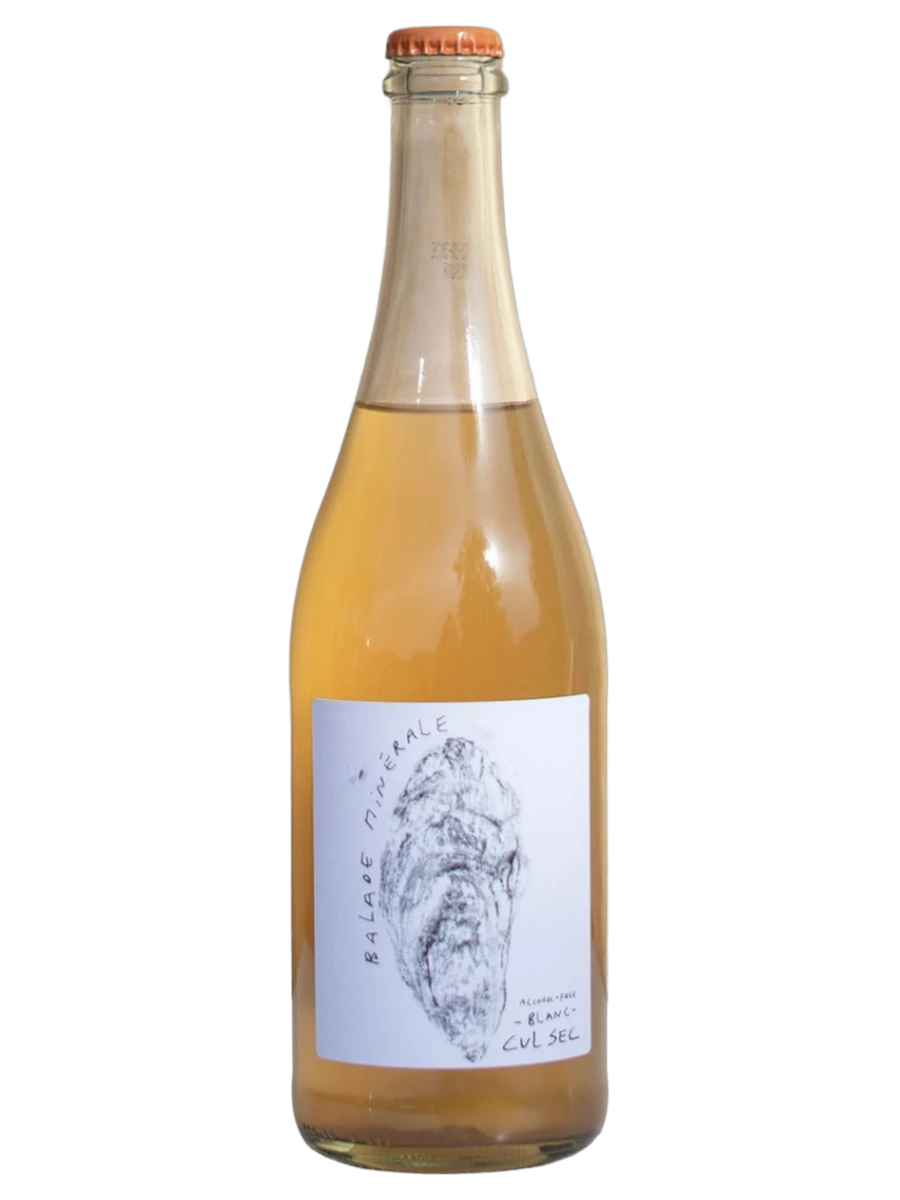
86/100
The short takeDistinctive and genuinely complex. Decisive acidity, pronounced saline minerality and a persistent chalky finish give it real structure, and a lightly funky herbal edge adds depth. More convincing as an adventurous botanical blanc than as a conventional white-wine stand-in.
Tasted Karl HillHow we score
Who it’s for An adventurous, dry glass with food.
TDS Wineprint
This pour · documented production
In the glass
- Nose
- Green gooseberry, tart apple and a hint of stone fruit, framed by a sea-spray note that sets the fruit in a saline register.
- Palate
- Bright acidity leans sour and sets a sharp pace, met head-on by pronounced saline minerality. A lightly funky herbal edge adds depth through the middle. The mineral character shapes the texture rather than simply adding another flavor.
- Finish
- Dry and chalky, with savory brine that persists well after the fruit fades. The mineral impression has the last word.
Structure and likeness Show Hide
Structure
- Sweetness
- Dry
- Acidity
- Bright acidity
How wine-like is it?
Separate from the score. A convincing resemblance is not a higher rating.
Wine-like in its acidity and complexity, but the botanical and saline character takes it beyond conventional white wine.
The wine
Balade Minérale is built around its finish. Chalk and brine linger well after the fruit has gone, with a savory, oyster-shell grip that gives the glass real texture. The minerality is pronounced enough to suggest a sense of place, and few nonalcoholic whites leave this much behind.
The acidity is bright and decisive, leaning sour rather than merely fresh, and it sets the pace on the palate. Pronounced saline minerality meets it head-on, while a lightly funky herbal edge fills the middle. Nothing here has been softened to please; the balance is assertive on all sides, and it holds.
The aromatics are focused rather than showy: green gooseberry, tart apple and a hint of stone fruit, framed by sea spray that points the nose toward the savory palate. The fruit is the frame, but the argument is structural: acid, salt and chalk.
This is not a stand-in for a conventional white, and it is better for not trying. Judged as a botanical blanc on its own terms, it is complex, persistent and unusually food-minded. Drinkers who want a familiar, fruit-forward white may find it austere. Pour it with something briny or savory, and the 86 points make sense.
Exact Cuvée 2025 bottle. Karl Hill’s photographs resolve the package nutrition at 22 calories and 3.5 g sugar per 100 ml, and establish the full ingredient and shellfish-trace declarations. They also separate Dutch production by Fruitslagers from the German origin of the Müller-Thurgau and Bacchus grapes. These package facts are separate from Karl’s existing firsthand tasting and 86-point score.
86 sits above the median of the 11 alternative wine bottles we've tasted.
The bottle
Show
Hide
Maceration-built botanical wine alternative: producer's own wording 'a maceration of wild herbs, wine grapes and fermentations' — wild-plant and wood infusions, oyster-shell solutions, verjus from unripe grapes, lacto-fermented fruit and water kefir; no alcohol removal takes place (the <0.5% ABV ceiling is not the product of dealcoholization).
Research notes
A retailer description that names Chardonnay and Pecorino is a different wine and is not used here.
Where to buy
- Cul Sec at Fruitslagers
- Package
75 cl
$37 (thezeroproof.com)
- Also listed
- Cul Sec at Fruitslagers · Producer
- The Zero Proof
- Availability
thezeroproof.com, onggi.com, freakofnature.wine, lessthan05.com, chenninchenin.com
Availability is market-specific; a producer link does not establish shipping to every country. Prices and availability are independently observed and may change. Retailer listings do not imply endorsement. A different package is labeled as a different format. Reader-service exceptions and commercial links are identified above; neither affects scores, rankings, classification, verification, or editorial coverage.
Product facts
- Producer
- Fruitslagers / Cul Sec
- Vintage
- 2025
- Grapes
- Müller-Thurgau and Bacchus
- Bottle / can
- 75 cl (750 ml)

Sources disagree on Country. Send a correction
Sources & verification
Show details
Hide details
Source links leave this site and open in a new tab.
Where sources disagree
Sources disagree on the following points.
- Country: Grape origin and producer location describe different facts. The supplied photographs do not establish the finished drink’s country of manufacture; the existing country value is retained without treating it as label-verified manufacturing origin.
Evidence at a glance
- Bottle verified18 facts
- Producer documented1 fact
- Retailer sourced1 fact
- Unverified2 facts
Production record
One core fact remains to be documented or rechecked.
- Classification
- Verified
- Method
- Not applicable
- ABV
- Ceiling declaration
- Origin
- Documented
- Record
- Has open discrepancy
Sources
-
Bottle / can label Bottle label
- ABV
- Identifiers
- Barcode (EAN/GTIN)
- Region
- Ingredients
- Volume
- Country (sources disagree)
- Calories
- Sugar
- Nutrition
- Allergens
- Producer
- Importer
- Product
- Brand
- Vintage
- Grapes
- Bottler
6 notes
- Identifiers
- EAN transcribed from exact bottle and check-digit validated.
- Barcode (EAN/GTIN)
- Transcribed from the barcode digits on the supplied Cuvée 2025 back-label photograph.
- Region
- Bottler/producer location is Culemborg, Netherlands; grape source is Kitzingen, Germany.
- Country
- Exact bottle names Fruitslagers as bottler in the Netherlands; German grape origin is recorded separately.
- Allergens
- Exact bottle says may contain traces of shellfish.
- Producer
- Exact bottle names Fruitslagers as bottler and Cul Sec as the product domain.
Product record history Sourced changes and open disagreements. Prior claims stay on the record when sources conflict.
- ReviewedReviewed and published.
- UpdatedCatalog record updated from sourced research.
- OpenDiscrepancyCountry.
86/100